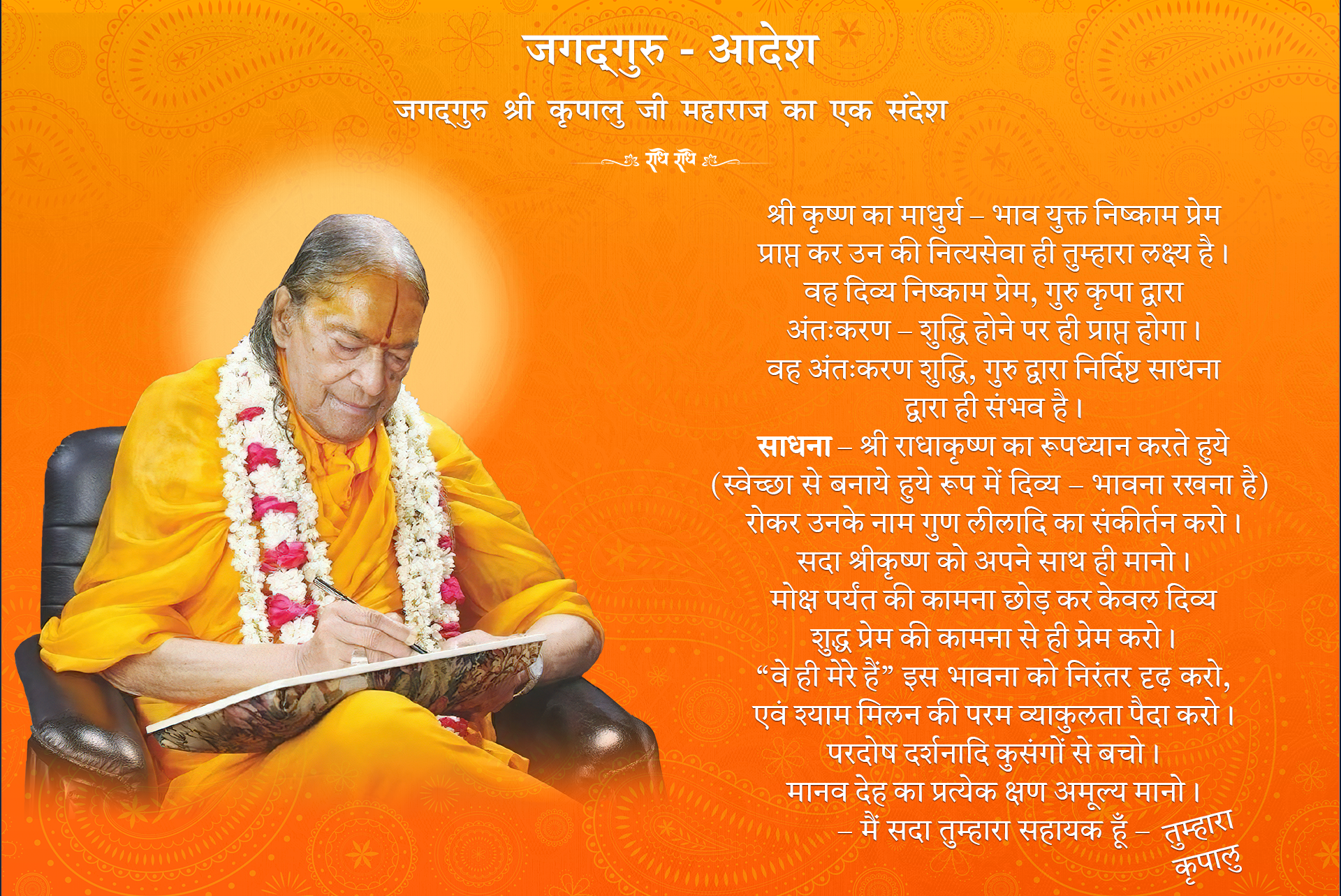
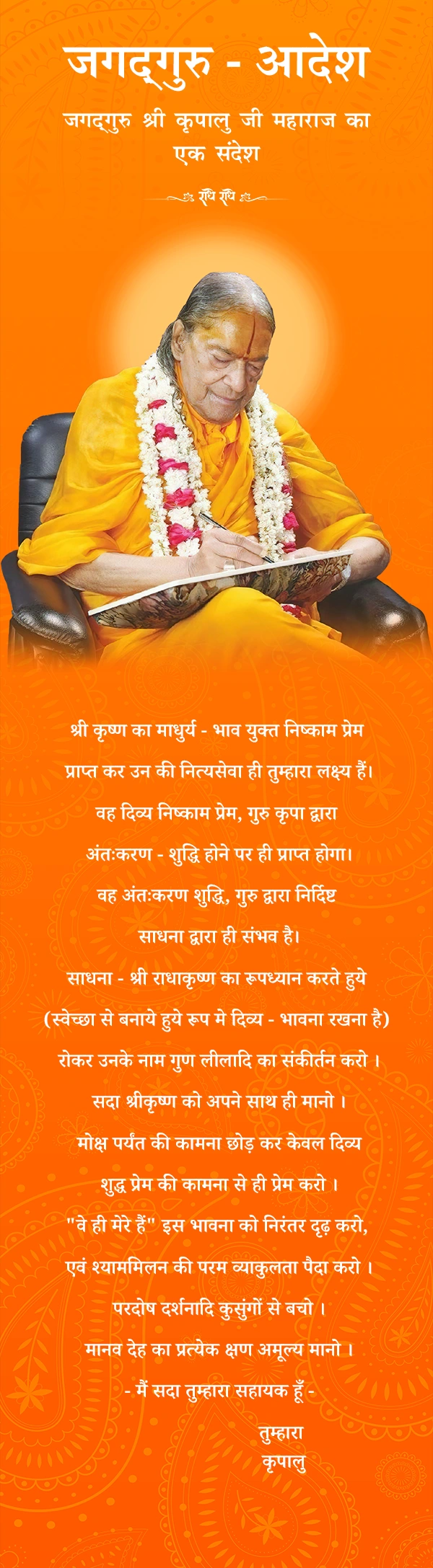
The discourse begins with a prayer and an invocation to Lord Krishna, asking everyone to chant the divine name and prepare to listen carefully. The main subject is the two questions: “Who am I?” and “Who is mine?”
People usually think that the word “I” refers to the physical body. However, according to the teachings of the scriptures, this is not correct. The physical body is made of five material elements—earth, water, fire, air, and space. Although the human body is very precious because it gives us the opportunity to understand the truth about ourselves, it is still temporary and physical. When a person dies, people say that the person has left, even though the body is still present. This shows that the person and the body are not the same.
There are three bodies associated with the soul. The first is the gross physical body, made of the five material elements. The second is the subtle body, which consists of the five senses, five organs of action, five vital airs, the mind, intellect, and ego. The third is the causal body, which contains our deep desires and the results of actions from countless lifetimes. However, the soul is different from all three bodies. When these bodies are eventually left behind, the soul can attain liberation.
The next important question is what every soul truly wants. People may desire money, family, fame, comfort, success, or other worldly things, but behind all these desires is one basic desire—happiness or bliss (anand). Every person continuously tries to become happy. Whether someone is eating, sleeping, working, laughing, crying, earning money, or doing something else, there is always a desire for happiness behind the action.
Although people spend their entire lives searching for happiness, they often search for it in the wrong places. Happiness is sought in material possessions, relationships, wealth, food, fame, and other worldly experiences. Yet, even after receiving many of these things, desires do not end. Instead, attachments and worries often increase. A person may begin life with very few worries, but as relationships, possessions, wealth, and responsibilities increase, new forms of unhappiness also appear.
True happiness means peace, satisfaction, fulfillment, and a state where nothing more is desired. The example of butter becoming ghee is used to show this. When butter contains water, it makes a lot of noise while being heated. As the water disappears, the noise decreases, and when the butter becomes ghee, it becomes quiet. Similarly, when a person becomes spiritually fulfilled, there is no personal desire left to satisfy.
Spiritual fulfillment does not mean stopping all actions. Saints and great personalities continued to work even after attaining spiritual fulfillment. Their actions were not for their own personal happiness. They worked for the welfare of others. This is compared to ghee cooking a roti: the ghee does not make noise for itself but acts for the purpose of cooking the roti. Similarly, God and Saints act out of compassion and for the benefit of others.
God Himself is bliss. The scriptures describe God not as someone who merely possesses happiness but as happiness itself—Sat-Chit-Anand, meaning existence, consciousness, and bliss. Since individual souls are described as parts or powers of God, the soul naturally desires bliss. This is why no soul can stop seeking happiness. For countless lifetimes, people have been trying to find this happiness, but material things can not provide lasting fulfillment.
Because people do not understand “Who am I?” and “Who is mine?”, they become attached to temporary relationships and possessions. A child becomes attached to parents, then to a spouse, children, grandchildren, wealth, houses, cars, and many other things. As these attachments grow, the possibility of suffering also increases. When something happens to a loved one or a possession, pain is experienced because of these attachments.
The scriptures therefore teach that we should know and attain the one of whom we are a part of. Paths such as karma and knowledge are discussed, but they cannot by themselves provide the complete bliss that the soul seeks. Therefore, the path of bhakti, or devotion, is presented as the way to attain the ultimate goal.
Everyone is eligible for bhakti. A person may love God while knowing that He is God or may love Him through another relationship without fully understanding His divine nature. What matters is genuine love from the heart. The examples of the gopis of Vrindavan are given to show this idea. Their intense love for Krishna was so selfless that they cared more about His happiness than their own. Their love is presented as an example of complete devotion.
The mind can become connected to God through different emotions, including love, fear, anger, or even hostility, and the scriptures give examples such as the gopis, Kamsa, and Shishupala. However, for devotees, the recommended relationships with God are servitude, friendship, parenthood, and the relationship of a beloved. Through bhakti, a loving relationship with God can be developed even without first understanding all the philosophical details.
The example of Krishna as a child also shows the sweetness of devotion. Although Krishna is described as the Supreme Lord who is feared even by the god of death, He allows Himself to be treated like an ordinary child by Mother Yashoda. He accepts her affection, discipline, and care. This shows how, through devotion, God allows His devotees to experience a personal and loving relationship with Him.
The main teaching is that we are not merely the physical body, the subtle body, or the causal body. We are eternal souls, connected to God and naturally seeking eternal bliss. Material possessions and relationships may give temporary happiness, but they can not satisfy the deepest desire of the soul. The path of sincere devotion and love for God is presented as the way to reach true fulfillment.
The message is to understand our true identity, reduce our attachment to temporary things, and develop genuine love for God. Through bhakti, the soul can reach its true destination and attain lasting bliss. All glories to Shri Radha Krishna!